Aromatic Education
Essential Oil Oxidation: What Happens
Reviewed by Quentin Olagne, certified aromatherapist (NAHA) • May 15, 2026
An essential oil never remains chemically static.
As soon as it encounters oxygen, light, heat, or humidity, some molecules slowly begin to transform.
This natural evolution can alter aroma, therapeutic behavior, and most importantly, skin tolerance.
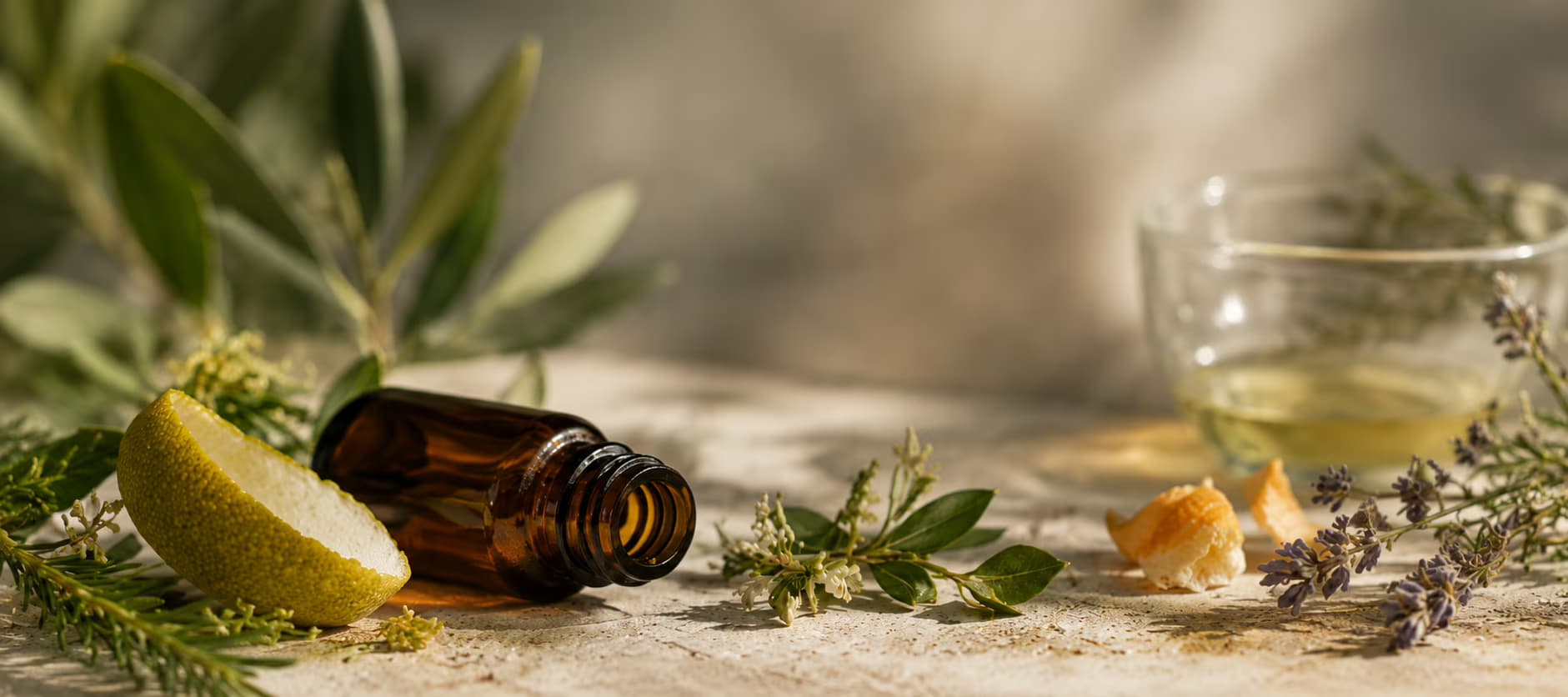
Why Essential Oils Oxidize
Oxidation refers to a chemical reaction between aromatic molecules and oxygen from the air.
Oils rich in monoterpenes (such as citrus oils, pine oils, or some eucalyptus oils) are particularly sensitive to this phenomenon.
Heat, UV light, repeated bottle opening, and prolonged air exposure dramatically accelerate degradation.
Monoterpenes
The Most Unstable Molecules
Monoterpenes are highly volatile and especially prone to oxidation.
This includes limonene, pinenes, and terpinolene.
Over time, these molecules can form peroxides and other oxidized compounds, often much more irritating to the skin.
Note: Peroxide formation is a common sign of essential oil oxidation as they age.
Highly Sensitive
- Sweet Orange
- Lemon
- Grapefruit
- Pine
- Tea Tree
More Stable
- Patchouli
- Sandalwood
- Vetiver
- Frankincense
- Cedarwood
Safety
Avoid mistakes related to aging or poorly stored oils.
Free first call · 15 min · no commitment
Why Oxidized Oils Can Become Irritating
A freshly distilled essential oil may be relatively well tolerated. But after oxidation, some compounds become significantly more sensitizing or irritating to the skin.
The most common reactions include redness, burning sensations, itching, or progressive sensitization.
Old opened citrus oils are a classic example of skin sensitization related to oxidation.
- Increased skin irritation
- Sensitization possible after repeated exposures
- Higher risk with oxidized essential oils rich in monoterpenes
- More frequent reactions on sensitive skin
Storage
How to Slow Oxidation
Amber Bottle & Light
Use amber bottles to protect essential oils from direct UV light.
Heat
Avoid heat sources. Store oils away from radiators, hot bathrooms, or cars in summer.
Air & Humidity
Close bottles immediately after use to limit air and humidity exposure.
Refrigeration
Citrus and monoterpene-rich oils benefit from cool storage or refrigeration to slow oxidation.
Approximate Shelf Life
| Essential Oil | Typical Shelf Life |
|---|---|
LemonCitrus limon | 1–2 years |
Sweet OrangeCitrus sinensis | 1–2 years |
Tea TreeMelaleuca alternifolia | 2–3 years |
LavenderLavandula angustifolia | 3–5 years |
PatchouliPogostemon cablin | 5–10+ years |
SandalwoodSantalum album | 10+ years |
💡 Oxidation does not necessarily mean an oil has “gone bad”. It means its chemistry has changed over time.
Citrus Oils
1–2 years
Approximate shelf life (with proper storage).
Conifers
2–3 years
Approximate shelf life for pines, firs, etc.
Deep Woody Oils
5–10+ years
Patchouli, sandalwood, vetiver, cedarwood, etc.
FAQ
The aroma becomes heavier, less fresh, sometimes metallic, and color may change.
Sometimes yes, but aroma quality is reduced and skin irritation risk increases.
Because they contain volatile monoterpenes like limonene that react easily with air and light.
Not recommended for skin use. Always check smell and appearance first.
Are your oils still safe to use?
Oxidation, expiration dates and storage conditions often create uncertainty. A consultation can help assess your oils and usage practices.
Free first call · 15 min · no commitment
Continue reading
Botanical Perspective
Oxidation is not necessarily a “defect”; it is part of the natural evolution of living aromatic material. Understanding this chemistry helps preserve oils better, reduce skin risks, and maintain the aromatic intelligence of plants.
In aromatherapy, this natural evolution highlights the importance of adapting usage as the chemistry of oils changes over time.
To better preserve aromatic preparations, also explore our carrier oils guide.
Sources & Further Reading▾Every study below was read in full while writing this article. Every numerical claim in the text traces back to one of them.
[1] The School for Aromatic Studies
Foundations Course (aromatic chemistry, oxidation, essential oils)
[2] Tisserand Institute
Oxidation of Essential Oils (skin risks, storage, monoterpenes)
[3] Contact Dermatitis
Sensitization to hydroperoxides of limonene and linalool
Dittmar, D., & Schuttelaar, M.L.A. (2019)
[4] Plant Therapy
Best practices for essential oil storage (storage, amber bottles, refrigeration, UV)